
 About this site.
location & layout of airfield.
B.C Form 10/ Lancaster Pilots Notes
576 Sqn Lancaster PD 309 recovery
GROUP CAPTAIN TERENCE JOHN ARBUTHNOT
576 Sqn Wing/Cmdr Basil Arthur Templeman-Rooke
576 Sqn F/O William Carland Johnston
49 Sqn Flt/Lt Victor Medway Arnold
49 Sqn Sgt. E.B.(Ted) Cachart.
49 Sqn Sgt Douglas D.R. Dalaway
576 Sqn Flt/Lt Bertram W. Roberts
576 Sqn Flt/Sgt Johnny Musgrove
576 Sqn Flying Officer Edward L Saslove
49 Sqn Pilot Officer Edgar R. G. Haines D.F.M.
576 Sqn Flying Officer Frank Wilson
576 Sqn Flt/Sgt Dennis Ovenden
49 Sqn Flying Officer Alexander V Bone
576 Sqn Warrant Officer Frederick Taylor, DFM
576 Sqn Warrant Officer Reg Croot
49 Sqn. S/L J.E Raw-Rees D.F.C.
576 Sqn Sgt Alfred Thorpe Turton
576 Sqn Warrant Officer Eugene Patrick (Jimmy) Collins
576 Sqn F/O Archibald de Largy Greig
WHY THIS WEBSITE WAS CREATED. This website was created in order to record the events and the exploits of those who served at Fiskerton during the war years. It also serves as a tribute to those persons and is a source of reference for anyone who has an interest in the airfield.
Joint webmasters are: Martin Nichols and David Briggs. Martin Nichols, despite being from a Naval family and who served in the Royal Navy also, has had a life-long interest in the wartime exploits of Bomber Command. Born in Bomber County, he spent many hours from a young age visiting and researching the old airfields which litter Lincolnshire- having a particular interest in Fiskerton.
David Briggs, who saw active service with the Yorkshire Light Infantry, has an interest in Bomber Command as a result of his Uncle's wartime service at Fiskerton where he flew thirty-two operations as a Radio Operator with 576 squadron.
David has spent many thousands of hours collecting the airfield records relating to the airfield and the squadrons which were there during the war. He is an excellent source of interest for anyone researching a relative who served at this airfield.
|
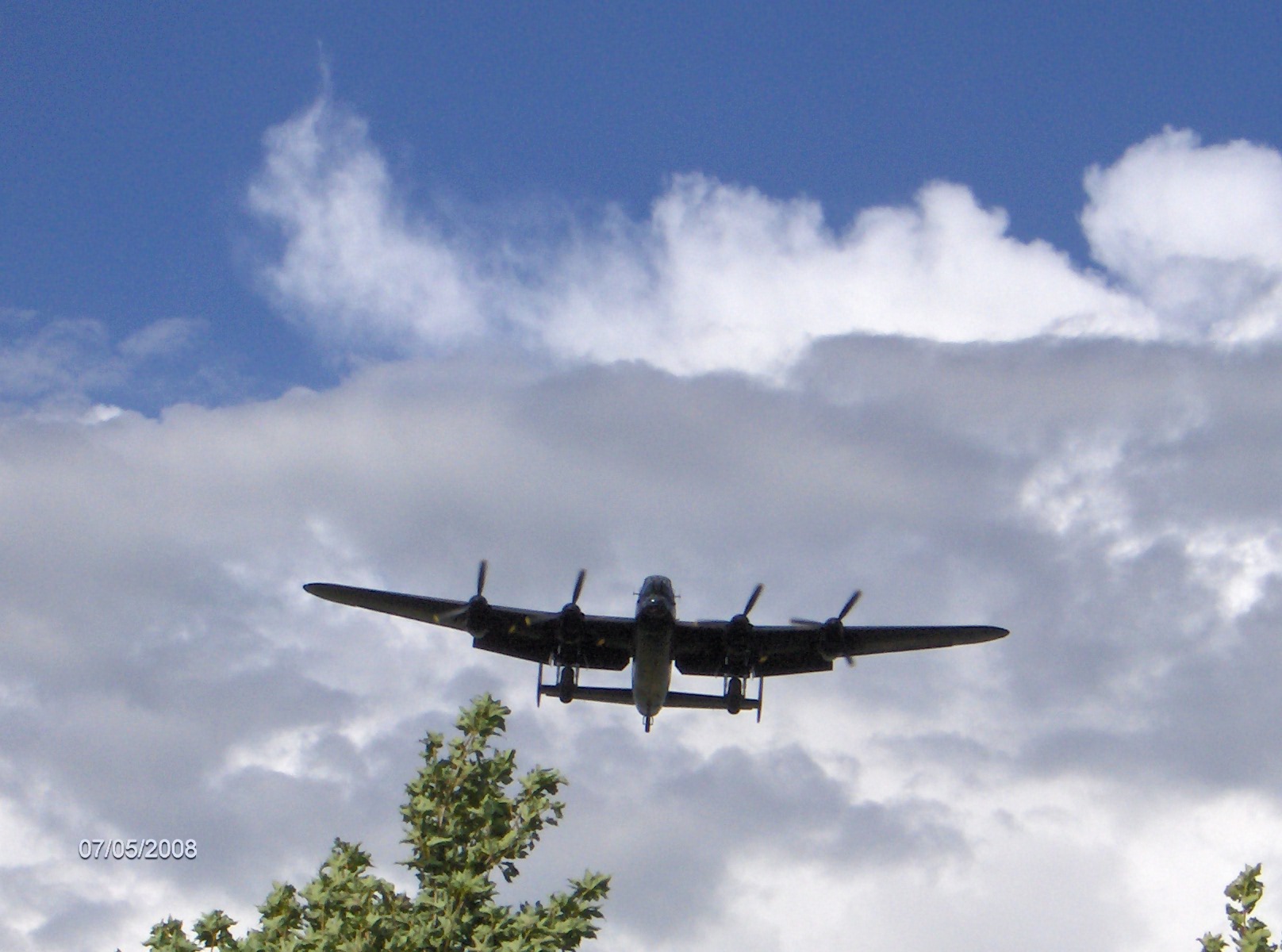 |
|
The images of Fiskerton were taken by Martin Nichols in 1968 and 2006. The wartime images were copied, with permission, from the MOD Bomber Command website and ww2images.com. The aircrew images were kindly donated by former aircrew or decendants of former aircrew and groundcrew. The image of East Kirkby's Just Jane was taken by Martin Nichols and published with the full permission of The Lincolnshire Aviation Heritage Centre,East Kirkby. My grateful thanks and appreciation is extended to all those persons who have contributed to this website, either by granting permission to access the airfield or by supplying me with information and photographs to put on the site. These contributions have enabled the website to expand. Anyone wishing to contribute information and photographs relating to Fiskerton to this website, please contact either myself or David Briggs at mn77@hotmail.co.uk (Martin Nichols) or fiskerton202@hotmail.co.uk (David Briggs) Credit to the sender will be given if desired. Many Thanks also to John Ward of the 49 Squadron Association for suppling many outstanding and rare wartime images of the airfield. PLEASE NOTE: access to many areas on and around the airfield is restricted. Permission to visit these private areas was given by the Land and Property owners for research purposes only. My grateful thanks go to these owners for granting me the necessary permissions to access the areas and take photographs. Without this, this site could not have been created. Please also note: for copyright purposes, the images on this website were either taken by ourselves, purchased by ourselves or are displayed with the full permission of the originator. Confirmation is available on request. The images taken by ourselves, were taken with the knowledge and permission of the landowners. The text is our own creation using facts learned from other sources and re-worded by ourselves. Anyone wishing to copy text or images from this website, must e-mail the webmasters in the first instance at: mn77@hotmail.co.uk or fiskerton202@hotmail.co.uk For more information on the subject of this website, please see Links pages 1 and 2 on this website.
|
|
